Skip to content
Mizo Development

Harbor · Early release

Storefront, billing and control panel in one self-hosted workspace.

Harbor is built by Mizo Development for hosting providers who want to sell plans, bill customers and operate game servers, virtual machines and web hosting from a single place they run themselves.

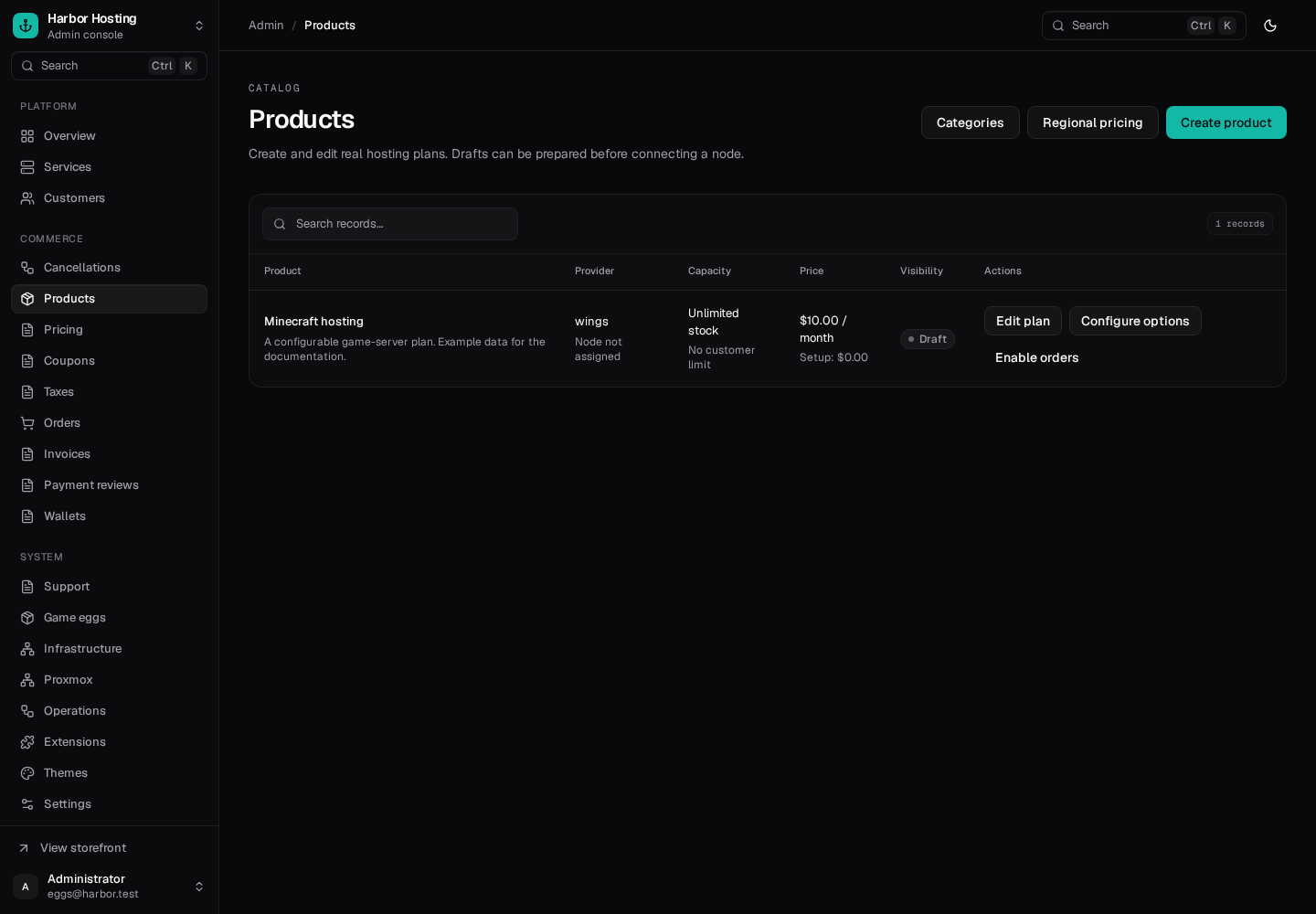
harbor / admin / catalog / products
Harbor products catalog listing a draft Minecraft hosting plan with provider, capacity, price and actions for editing the plan, configuring options and enabling orders.
Product catalog in the admin workspace

Product previews use fictional sample data.

Capabilities

Implemented in the current release.

Grouped by the part of the business they serve.

Game servers

Pterodactyl Wings automation

Provision and operate game servers on Wings nodes from the same workspace you bill from.

  • PTDL v1 and v2 egg imports
  • Latest stable Paper downloaded automatically on install and reinstall
  • SHA-256 verification of downloaded server jars
  • Browser game console
  • File uploads, downloads, folders, rename and archive tools
  • Backups and SFTP connection details

Infrastructure

Proxmox and Plesk adapters

Integration adapters for virtual machines, containers and web hosting alongside game nodes.

  • Proxmox QEMU virtual machines
  • Proxmox LXC containers
  • Plesk web hosting adapter
  • One infrastructure view across connected providers

Catalog

Products, options and regional pricing

Model what you sell, then price it for where your customers are.

  • Product catalog with categories
  • Configurable product options
  • Country and currency based regional pricing
  • Coupons
  • Draft plans before a node is connected

Billing

Invoices, wallets and payments

Issue invoices, accept payments and keep records consistent over time.

  • Invoices with PDF output
  • Tax snapshots stored on each invoice
  • Partial payments
  • Customer wallets
  • Stripe, PayPal and offline payments
  • Payment review queue for staff

Support

Tickets with private staff notes

Handle customer questions next to the services and invoices they relate to.

  • Customer support tickets
  • Private staff notes on tickets
  • Cancellation requests with staff review

Platform

API, plugins, themes and settings

Extend Harbor and make it look like your company, not ours.

  • Scoped API keys for customers and administrators
  • OpenAPI description of the API
  • Trusted backend plugins
  • Frontend themes
  • Branding, SMTP, automation and admin settings

Previews

Real screens from the repository.

Product previews use fictional sample data.

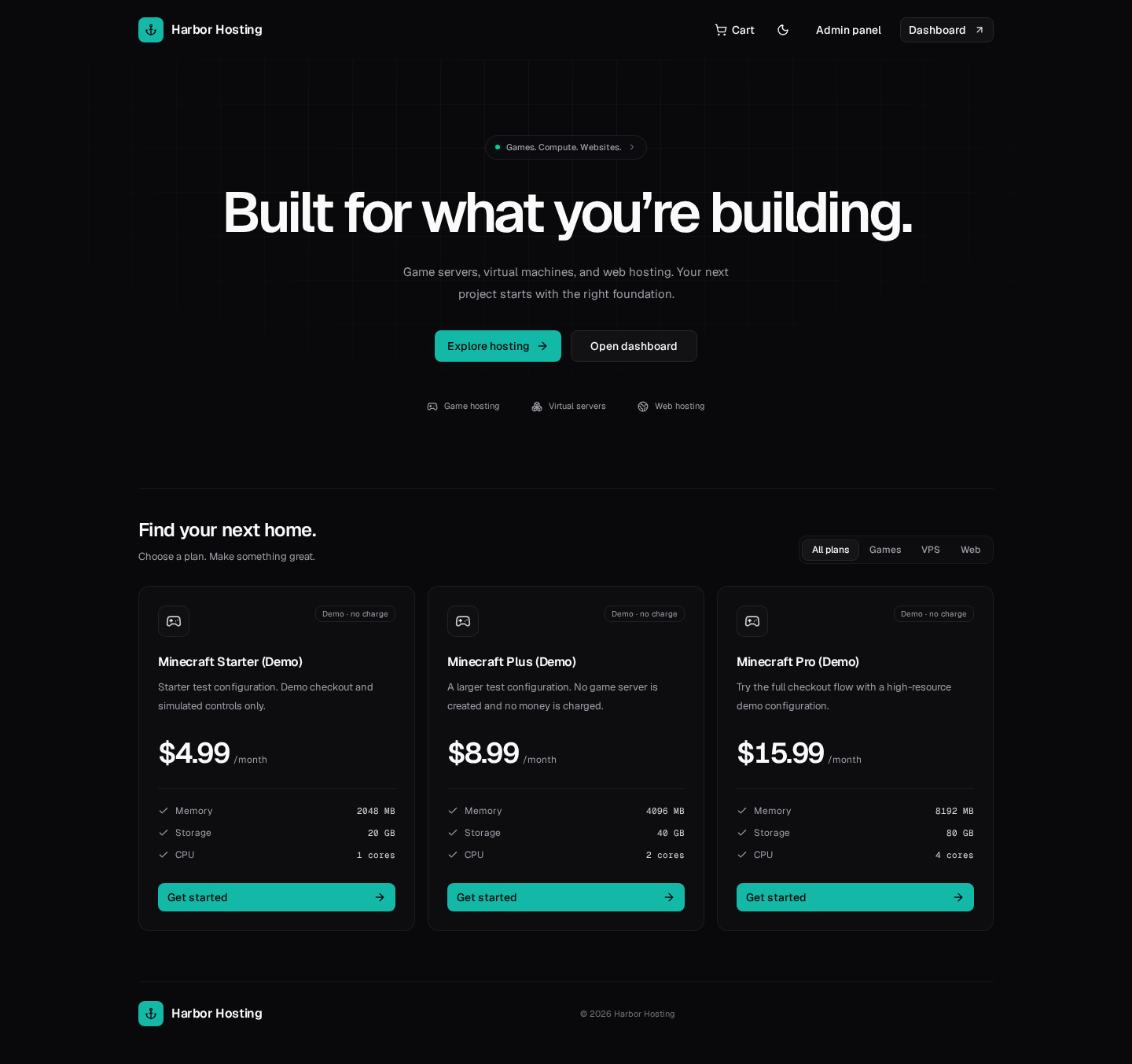
harbor / storefront
Harbor public storefront with a hero headline, category filters for games, VPS and web, and three demo Minecraft plans listing memory, storage and CPU.
Public storefront
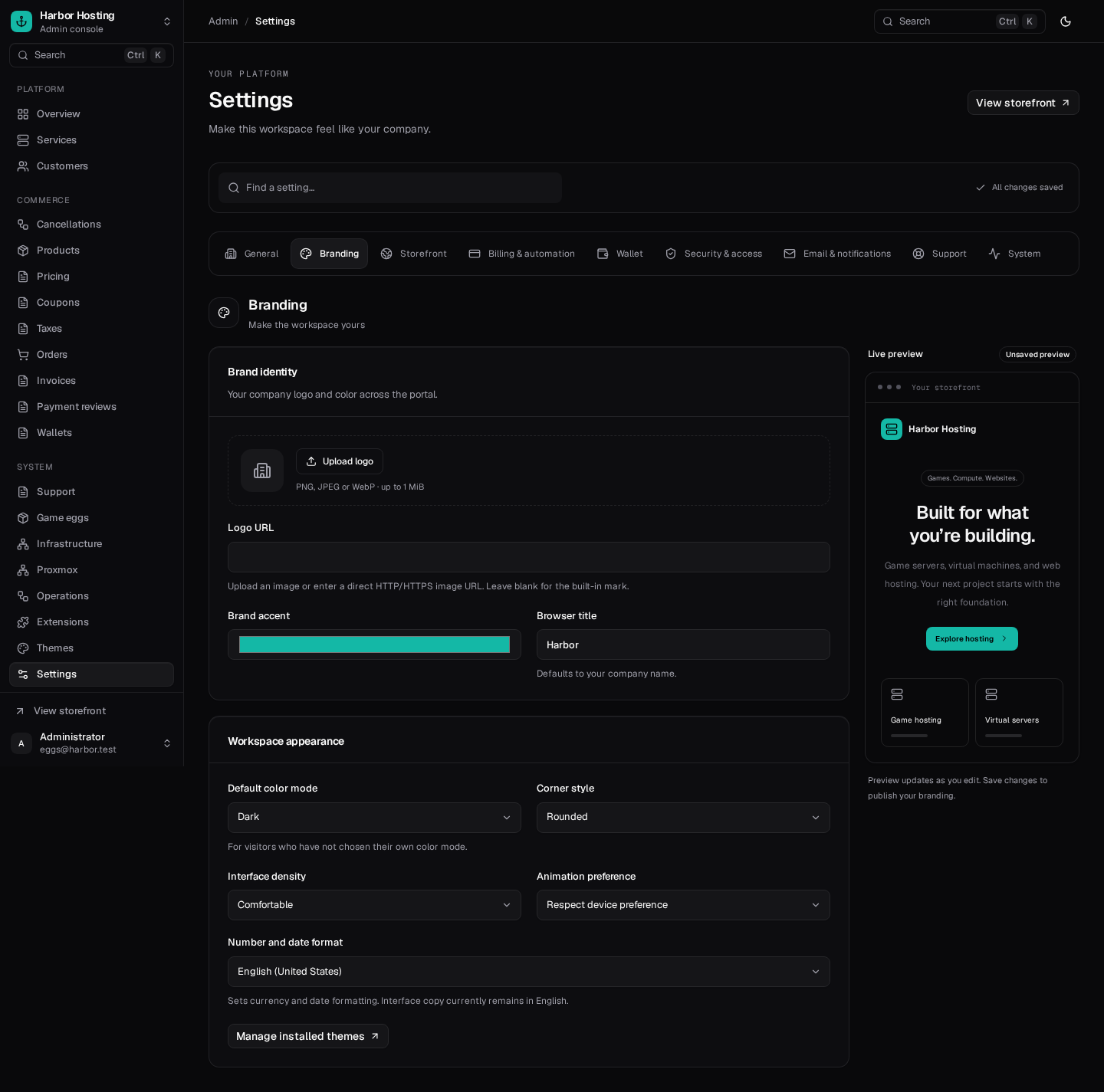
harbor / admin / settings / branding
Harbor branding settings with logo upload, brand accent color, browser title, workspace appearance options and a live storefront preview.
Branding settings with live preview

Built for small screens too

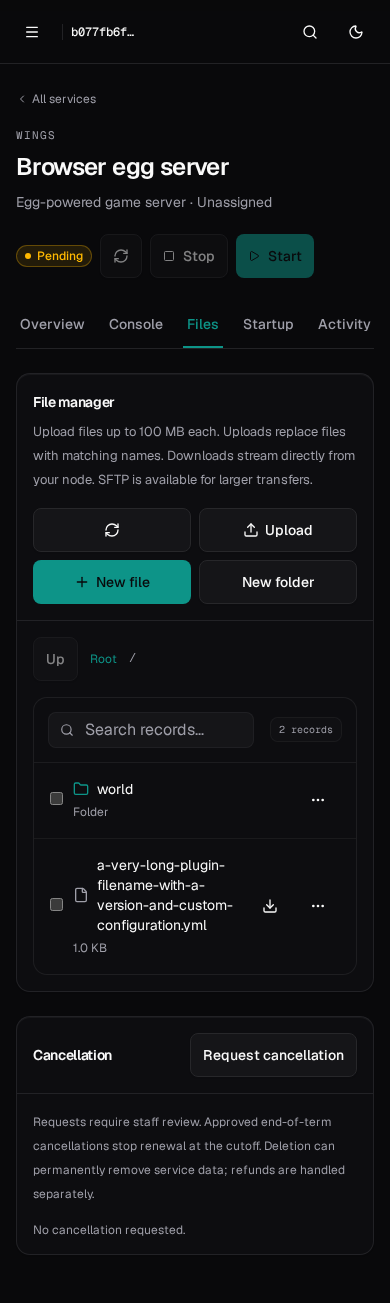
The customer dashboard is responsive, so customers can check a service, manage files or restart a server from their phone.

Harbor customer service page on a phone, showing the Files tab with upload, new file and new folder actions, a world folder and a configuration file.
Customer file manager

Release status

Early release, stated plainly.

You should know exactly what Harbor does and does not do before you run a business on it.

Before you go live

  • Harbor is in early release and under active development.
  • Operators must validate provisioning, billing and payments against their own provider infrastructure before taking real orders.
  • No production certification of any kind is claimed.

Not implemented yet

  • Prorated upgrades and downgrades
  • Saved-card recurring gateway billing
  • Automated gateway refunds
  • Domain registration
  • Full interface translations
  • Fine-grained staff roles
  • Full Paymenter compatibility
Read the full feature status(opens in a new tab)

Get started

Read the source. Run it yourself. Tell us what you find.

Questions, bug reports and feedback go through GitHub issues. Issues are public, so keep credentials and private details out of them.